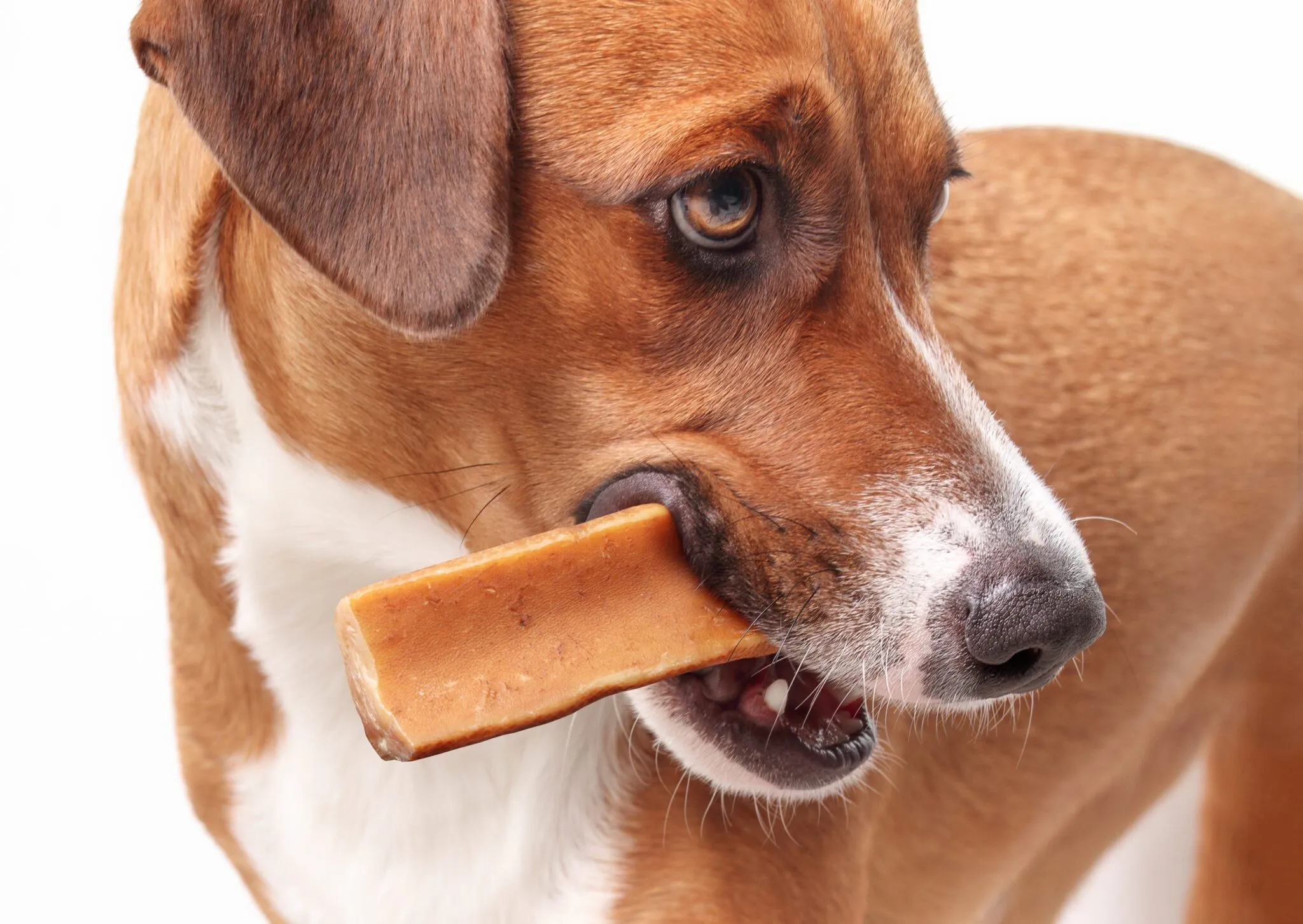
Yak cheese sticks have become a favored substitute for rawhide among dog chews.  Credit: Petra Richli, Getty Images
Michele McHugh’s Shepherd mix, Doodle, who tipped the scales at about 80 pounds, was passionate about chewing. She had a collection of chew toys that she adored, and McHugh would occasionally offer her edible chews as special treats to keep her occupied and happy.
However, this dog owner from the Houston, Texas area felt uneasy about providing rawhide bones to Doodle, leading her to explore and select various alternatives to rawhide instead.
There exists a plethora of options available today beyond traditional rawhide products, as McHugh points out.
Over the past several years, interest in substitutes for rawhide has surged significantly. A quick scan of pet store shelves and online shopping platforms reveals an abundance of items marketed specifically as safer alternatives to rawhide. Among the standout choices for effective rawhide replacements are several categories worth considering:
- Collagen-based chews designed specifically for dogs
- Freeze-dried and dehydrated meat or treat options
- Products branded as no-hide rawhide, such as those from Earth Animal
- Popular dental treats like Greenies
- Durable yak cheese sticks
- Simple homemade treats crafted from everyday kitchen items like carrots, dehydrated slices of sweet potatoes, other vegetables safe for canine consumption, or even frozen fruits suitable for dogs
Understanding the Issues with Rawhide: Reasons to Seek Alternatives
Rawhide is produced by processing and drying the hides of animals, most commonly beef. It remains a staple item in the dog treat market, with products ranging from simple rolls to knotted bones and more elaborate shapes. These items are manufactured both domestically in the United States and imported from regions including China, Mexico, and various South American nations.
Numerous manufacturers promote their rawhide offerings as fully digestible, safe for consumption, and entirely natural. Despite these assurances, a growing number of dog guardians and veterinary professionals prefer to turn to rawhide alternatives primarily because of apprehensions surrounding the chemicals sometimes employed in processing, risks of bacterial contamination, and broader concerns related to health and overall safety.
Veterinarian Brian Collins from the Cornell Riney Canine Health Center recalls noticing an uptick in complications during his practice. “I began encountering more cases where dogs had rawhide lodged at the back of their throats, resulting in choking incidents,” he explains. “In other situations, pieces would become trapped in their gastrointestinal tract, leading to vomiting episodes or even full blockages.”
It’s important to recognize that while rawhide poses these risks, virtually any type of chew carries the potential for mishaps such as digestive upset or choking dangers specific to individual dogs. Dr. Collins also expresses concern regarding the impact of rawhide and similar chews on dental health. “I’ve observed dogs fracturing their canine teeth while gnawing on rawhide, and unfortunately, other types of chews can lead to similar dental injuries,” he notes.
For dogs that exhibit intense chewing behaviors, identifying the ideal product can prove quite challenging. So, what strategies can help determine the most suitable option for your particular canine companion?
Selecting the Ideal Chew for Your Dog
Chewing provides dogs with valuable opportunities for mental engagement, physical activity, and simple enjoyment. For many pets, receiving a new chew serves as a highly motivating reward that they eagerly anticipate.
Prioritizing Flexibility and Digestibility in Rawhide Substitutes
To meet a dog’s instinctive urge to chew safely, Dr. Collins offers clear guidance: “My general guideline is to select chews that exhibit flexibility-you should be able to make an indentation with your fingernail or snap them apart using just your hands,” he advises.
This criterion is crucial for minimizing damage to a dog’s teeth caused by persistent gnawing on overly rigid materials. “Frequently, I end up diagnosing broken teeth during exams, or dogs arrive with a fresh fracture,” Dr. Collins shares. “It’s rarely a matter of whether it will happen, but rather when. Addressing a broken tooth typically requires either extraction or a root canal intervention.”
Conversely, appropriate chewing action on suitable products promotes dental hygiene by mechanically scraping away accumulated food particles and tartar buildup from the teeth surfaces.
For vetted recommendations on dental-friendly options, consult the accepted products list maintained by the Veterinary Oral Health Council (VOHC), an independent body affiliated with the American Veterinary Dental College. This organization rigorously evaluates dental products for pets and grants its Seal of Acceptance to those that demonstrate effectiveness in controlling plaque and tartar for dogs and cats alike, adhering to stringent standards.
Beyond dental benefits, Dr. Collins emphasizes digestibility as another key reason for favoring pliable chews. “Ensure that anything your dog might ingest breaks down readily in the stomach,” he recommends. “Items that are soft enough to bend, indent, or break by hand tend to pose fewer risks if swallowed.”
Scrutinizing Ingredients in Dog Chews
Always review the ingredient list on any chew product to confirm compatibility with your dog’s potential allergies or sensitivities. For instance, collagen chews are generally sourced from bovine hides but utilize a softer inner dermal layer distinct from traditional rawhide production. Yak cheese sticks, on the other hand, derive from a blend of yak and cow milk, classifying them as dairy-based treats. Freeze-dried varieties often feature proteins from duck, chicken, lamb, venison, or additional animal sources.
“Certain chews incorporate additives like rice flour or glycerin, which might not align with a dog’s everyday diet,” Dr. Collins observes. “Provided the dog shows no adverse reactions to these components, moderate use should be fine.”
Non-edible options such as durable rubber toys from brands like Kong or GoughNuts provide excellent outlets for avid chewers. Steer clear of anything prone to splintering or composed of non-digestible materials that could fragment into swallowable shards.
When evaluating potential rawhide alternatives, take time to peruse customer reviews online for the specific product. A quick search of the item’s name can uncover any history of legal actions or official recalls. Additionally, verify that the product’s country of origin is transparently disclosed on the label or packaging.
Essential Safety Measures for Administering Dog Chews
Exercising caution is paramount whenever introducing any chew to your dog. Here are key precautions to observe:
- Select chews matched to your dog’s size and chewing intensity to mitigate choking risks. Prevent access to small pieces by larger dogs, and promptly discard chews that diminish to a swallowable size-particularly with vigorous chewers.
- Supervise your dog closely during chewing sessions to allow immediate intervention if issues arise.
- For entirely new chew types, conduct an initial trial by limiting session duration and monitoring digestive response over the ensuing 24 to 48 hours.
- Exercise extra vigilance with brachycephalic breeds-like Pugs, English Bulldogs, or French Bulldogs-whose shorter snouts increase the danger of airway obstruction from dislodged fragments.
- Ensure abundant fresh water is available, as chewing often induces thirst.
- Should any health symptoms manifest post-chew consumption, promptly consult your veterinarian.
McHugh fondly remembers how her dog thrived on bully sticks, yet she remained diligent about oversight. “I always ensured she didn’t reduce the chew to a hazardous size or sharpen it into something potentially injurious,” she recounts. “Responsibility extends to the owner too-you can’t simply hand over a chew and leave the room unattended.”