The ASPCA has recently published its comprehensive 2025 report, which scrutinizes the United States Department of Agriculture’s (USDA) enforcement of the Animal Welfare Act. This critical legislation was specifically enacted to safeguard dogs confined in puppy mills. The findings paint a grim picture: 2025 proved to be an advantageous year for unscrupulous puppy mill operators, yet it remained a devastating period for the countless dogs enduring unimaginable hardships within these facilities. The USDA’s longstanding pattern of lax oversight and permissive approaches has deteriorated even further, reaching new lows in accountability.
Even in the face of extensive documentation detailing appalling living conditions and profound animal suffering, the USDA initiated zero legal actions against puppy mill operators who were blatantly breaching federal regulations. Commercial breeding operations, which maintain vast numbers of breeding dogs and distribute puppies on a wholesale basis to pet retailers, research institutions, or online marketplaces, are legally obligated to furnish their animals with fundamental standards of care. These requirements encompass a structured veterinary care protocol for treating illnesses or injuries, adequately sized enclosures that permit dogs to turn around comfortably, daily provision of fresh and clean food, constant access to potable water, and shielding from extreme temperatures-especially vital since breeding dogs are often housed in drafty barns or dilapidated outbuildings.
The USDA bears the primary responsibility for verifying that dogs in these licensed commercial breeding establishments receive at least this baseline level of care. Regrettably, the agency consistently falls short in this duty, leaving these defenseless animals exposed to neglect and abuse. Inspections conducted by USDA personnel are sporadic at best, often superficial or erratic in their application, with the department favoring misguided initiatives that ostensibly “assist” breeders in meeting compliance rather than enforcing the law with rigor. This entrenched culture of feeble enforcement and non-interventionist stances plummeted to unprecedented depths throughout 2025. Although inspectors recorded numerous instances of dire circumstances, the agency took no prosecutorial steps whatsoever. Consequently, hundreds of thousands of dogs continue to be systematically exploited and subjected to harm annually, all in pursuit of financial gain.
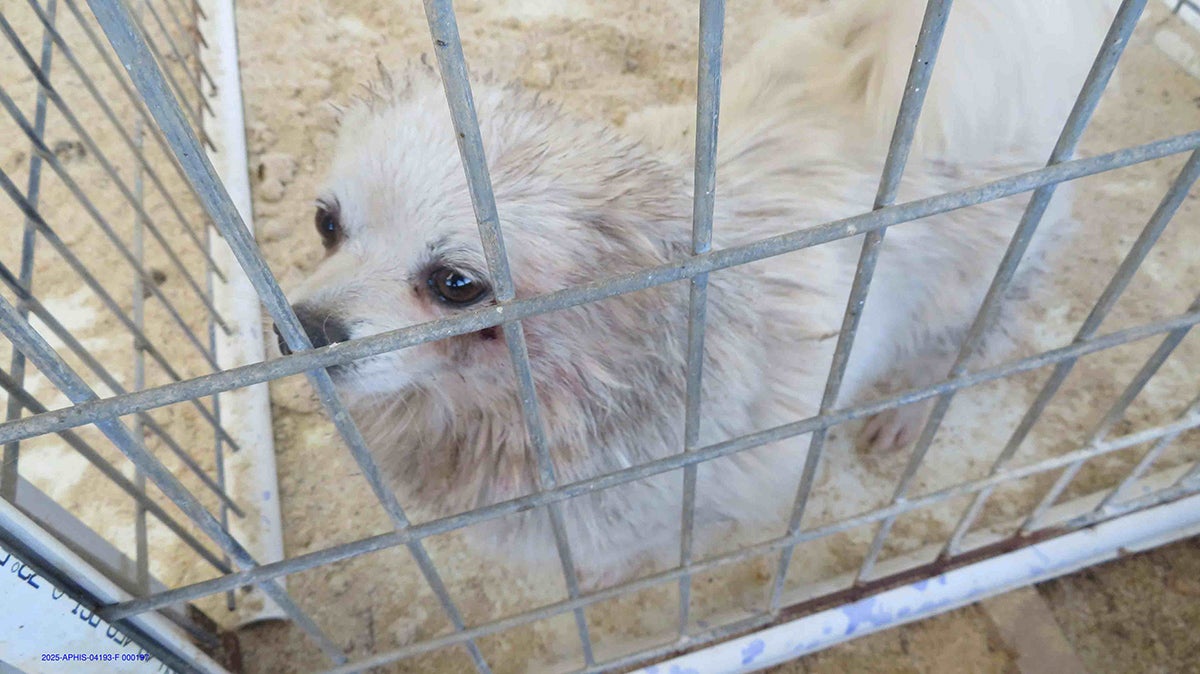
Detailed analysis in our latest report reveals that during 2025, USDA inspectors directly observed dogs plagued by untreated illnesses and injuries, subsisting on mold-contaminated food, deprived entirely of water, and confined in kennels overrun with cockroaches and rodents. These egregious infractions occurred exclusively at facilities holding valid USDA licenses for commercial operations. Despite possessing clear statutory powers to uphold the law-through mechanisms such as levying substantial fines, suspending or revoking licenses, and physically rescuing dogs in distress-the USDA repeatedly opted for inaction. Between September 2024 and October 2025, the agency officially recorded more than 680 distinct violations and undoubtedly encountered or became aware of countless additional ones. Astonishingly, every implicated commercial breeder retained their USDA license without interruption, no monetary penalties were ever assessed, and every afflicted dog-whether emaciated, injured, or gravely ill-was abandoned to languish in their squalid environments.
In the aftermath of significant staff reductions within the USDA over the past year, Agriculture Secretary Brooke Rollins and Attorney General Pam Bondi have publicly pledged to combat the cruelty rampant in puppy mills. Although specifics regarding these promised initiatives remain pending, we remain optimistic that the stark revelations outlined in this report will galvanize meaningful and lasting reforms within the agency.